Cart2Cart Review
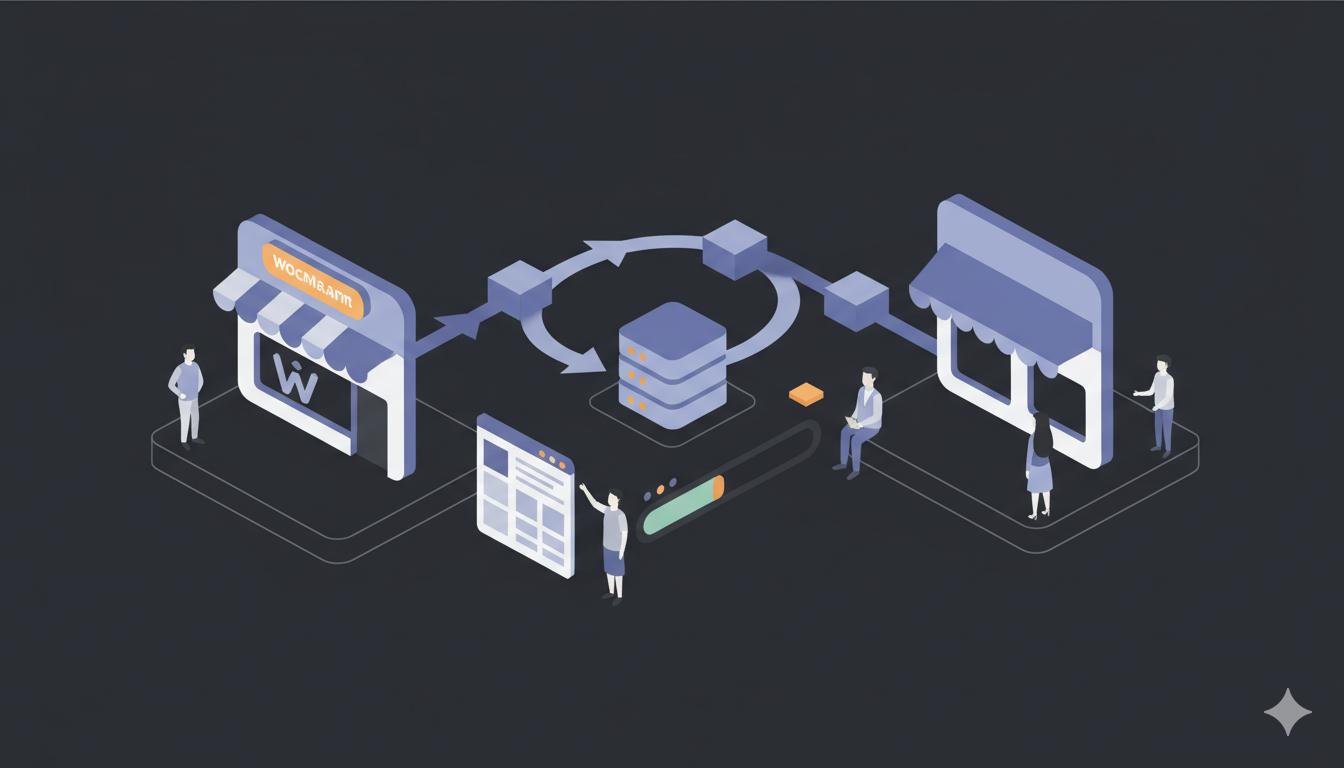
If you have Googled "how to migrate my store" anytime in the last decade, you have undoubtedly found Cart2Cart. Since 2009, they have positioned themselves as the undisputed leader in automated eCommerce migration. But being the biggest doesn't always mean being the best—or the most affordable.
In this comprehensive review, we strip away the marketing jargon to analyze Cart2Cart's real-world performance in 2025. We test their pricing structure, the accuracy of their data engine, their customer support, and hidden costs to help you decide if this tool is the right vehicle for your business renovation.
What is Cart2Cart?
Cart2Cart is a cloud-based automated migration service. It acts as a specialized data mover that transfers entities (products, customers, orders, reviews) from one shopping cart to another.
Unlike a "Connector App" that might only sync inventory, Cart2Cart is designed for one-time, full-scale re-platforming. Whether you are moving from a hosted solution like Wix or BigCommerce to Shopify, or from an open-source platform like Magento or WooCommerce to Shopify, Cart2Cart claims to handle the heavy lifting without requiring a single line of code.
- Supported Platforms: 85+ (including WooCommerce, Shopify, Magento, BigCommerce, PrestaShop, etc.)
- History: Over 15 years in the market.
- Method: Automated API & Bridge connection.
How Does It Work? The "Connection Bridge"
One of Cart2Cart's strongest selling points is its non-invasive approach. It does not require you to install software on your computer or shut down your current store.
1. Source Connection
If you are moving from a hosted platform (like BigCommerce or Wix), you simply provide your URL and API credentials. If you are moving from an open-source platform (like Magento or WooCommerce), you download a "Connection Bridge"—a small file containing a script. You upload this to your store's root folder via FTP. This bridge opens a secure gateway for the data extraction.
2. Target Connection
For Shopify, you provide your Admin API access token. Cart2Cart uses this to write data directly to your Shopify store via the REST Admin API.
3. The Cloud Engine
Once connected, Cart2Cart's servers act as the middleman. They read data from the Source, reformat it to match Shopify's API structure, and write it to the new store. Crucially, nothing is deleted from your Source store. It remains live and fully operational throughout the process.
Feature Deep Dive: What Can It Actually Move?
The scope of migration depends heavily on the specific pair of carts you are connecting, but generally, Cart2Cart offers the widest range of transferable entities on the market.
Core Data (The Basics)
- Products: Names, SKUs, Descriptions (full HTML), Prices, Weights.
- Images: Main images, additional gallery images, and images embedded in descriptions.
- Variants: Attributes like Size, Color, and Material.
- Collections: Names, descriptions, images, and hierarchy (nested sub-collections).
- Customers: Shipping/Billing addresses, emails, phone numbers.
- Orders: Order dates, statuses, product lines, sub-totals, tax info.
Premium Options (The Differentiators)
This is where Cart2Cart stands out from cheaper tools. They offer advanced capabilities—usually for an extra fee:
- Customer Passwords: For platforms like Magento, PrestaShop, and WooCommerce, Cart2Cart can migrate password hashes. This allows customers to log in to the new store without resetting their password. (Note: This is rarely possible from BigCommerce/Wix due to encryption limits).
- Reviews: Migrates user-generated content, including star ratings, titles, and review dates.
- Discount Codes: Moves your discount codes and rule sets.
- Blog Posts: Migrates article titles, bodies, images, and even comments (if your source platform has a blog).
The Pricing Analysis: Is It Expensive?
This is the most controversial aspect of Cart2Cart. Their marketing often touts "Starting at $29," but for most serious businesses, the final bill will be significantly higher.
The Estimator Model
Cart2Cart does not have a fixed price. Cost is calculated based on the volume of data.
Example pricing (Estimates based on 2025 rates):
- Micro Store (100 products, 500 orders): ~$69 - $89
- Small Store (1,000 products, 5,000 orders): ~$149 - $199
- Mid-Size Store (5,000 products, 20,000 orders): ~$299 - $400
- Enterprise (50,000+ entities): $700+
The "Hidden" Costs: Additional Options
The base price only covers the data transfer. To get a "complete" migration, you almost certainly need the paid add-ons. These quickly add up:
- Preserve Order IDs (+$49): Essential if you want Order #1000 to remain #1000.
- Create 301 Redirects (+$59): Critical for SEO.
- Migrate Collections/Products SEO URLs (+$59): Keeps your old URL structure.
- Migrate Customer Passwords (+$49): Essential for UX (platform dependent).
Migration Insurance (Remigration)
Cart2Cart offers "Migration Insurance" packages (adding 15-25% to the cost). This allows you to re-run the migration up to 3 times within a certain period. This is highly recommended because you will likely find setup errors in your new store that require a re-run.
Ease of Use: The User Experience
Despite the complex pricing, the User Interface (UI) is excellent. It is designed for non-technical users.
The 3-Step Wizard
The interface is clean and linear. It uses a progress bar system that makes it impossible to get lost.
- Setup: Paste your URLs and API credentials. The system automatically validates connections (green checkmarks).
- Map: A checklist appears. You tick the boxes for what you want to move. The "Mapping" interface is particularly good—it uses dropdowns to let you match Order Statuses (e.g., mapping "Complete" to "Fulfilled") and Customer Groups.
- Demo: The system forces a free Demo Migration (usually 10 products). This is a crucial safety step.
Speed: The engine is fast. A store with 2,000 products usually migrates in under an hour. However, images can slow this down significantly if your source server has strict bandwidth limits.
Customer Support
Support is a mixed bag. They offer 24/7 Live Chat, phone, and ticket support.
- Pre-Sale Support: Excellent. The sales team is responsive, helpful, and eager to assist you in estimating costs.
- Technical Support: Can be slow for the basic tier. If your migration fails halfway through (due to a server timeout, for example), you might wait 12-24 hours for a technician to reset it unless you bought a "Premium Support" package.
- VIP Service: For those willing to pay (packages starting at $1,000+), they offer "White Glove" service where their team handles the entire setup for you.
Pros & Cons Summary
✅ The Pros
- Reliability: It works. The success rate is extremely high compared to DIY methods.
- Vast Compatibility: If a cart exists, Cart2Cart probably supports it.
- Data Integrity: Excellent handling of parent-child relationships for product variants.
- Recent Data Migration: Allows you to top-up data after the initial migration, minimizing downtime.
- Demo Tool: The free demo lets you prove the concept before spending money.
❌ The Cons
- Expensive Add-ons: Essential features like 301 redirects should be standard, not paid extras.
- No Design Migration: It only moves data. Your theme, layout, and page design are not touched.
- Strict Support Tiers: Lower-paying customers get slower technical resolutions.
- Complex Pricing: It is hard to know exactly what you will pay until you are deep in the wizard.
Comparison: Cart2Cart vs. The Rest
vs. LitExtension
LitExtension is the primary competitor. They offer a very similar service but often at a slightly lower price point (sometimes 10-15% cheaper). LitExtension also tends to include some "Add-ons" (like Order ID preservation) in their base packages or for a lower fee. However, Cart2Cart's interface is generally considered slightly more polished.
vs. Free Tools (e.g., Shopify's Built-in Import)
Shopify offers free CSV import functionality. Do not be fooled. This is only suitable for simple product catalogs. It cannot handle complex variants, customer passwords, or order history. For a full store migration, you need a specialized service.
vs. Manual Export/Import
Manual migration is free but risky. If you value your time at more than $10/hour, Cart2Cart is almost always cheaper. Manually fixing broken image links and re-mapping variants for 1,000 products will take weeks. Cart2Cart does it in an hour.
The Verdict: Who Should Use Cart2Cart?
Cart2Cart remains the "gold standard" for automated migration, not because it is the cheapest, but because it is the most robust. It is a premium tool for businesses that treat their data as a critical asset.
You should use Cart2Cart if:
- You have a budget of $200+ and want the problem solved quickly.
- You are migrating complex data (variants, customer passwords, multi-language data).
- You are moving between two very different platforms (e.g., Wix to Shopify) where CSV formats do not match.
- You cannot afford to have your store offline for days.
You should look elsewhere if:
- You have a tiny store (under 100 products) – just do it manually.
- You have zero budget – try Shopify's free CSV import for simple products only.
Final Score: 4.5/5
The deduction is purely for the aggressive pricing of necessary add-ons. The technology itself is excellent.